Hawaiian bird archive · Honeycreepers
Iiwi
Drepanis coccinea · ʻIʻiwi
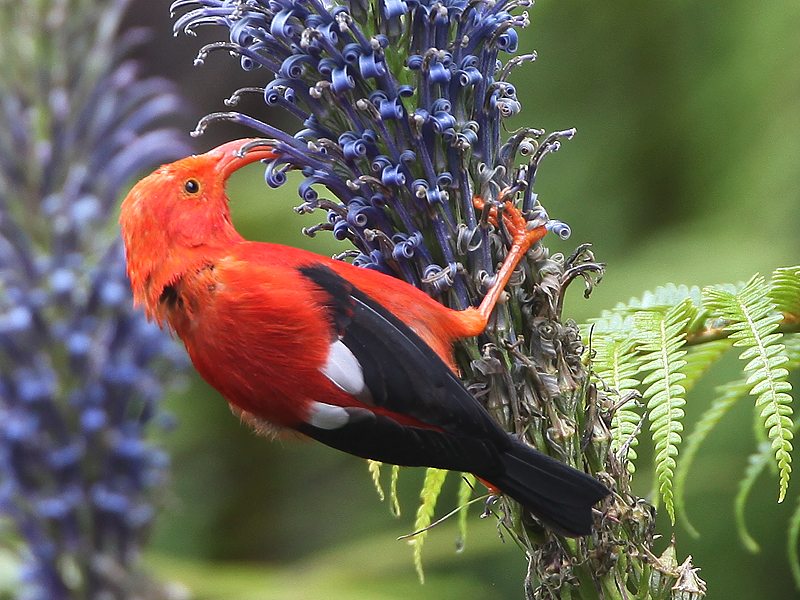
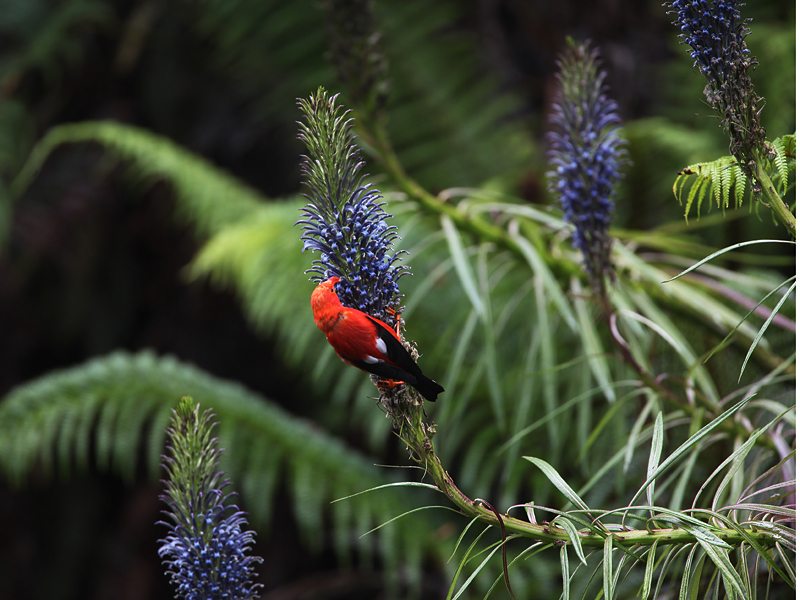
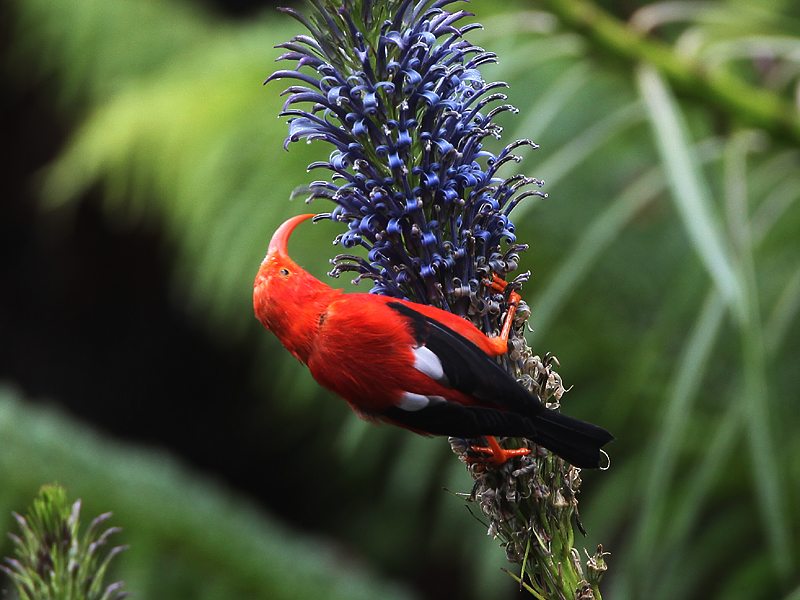
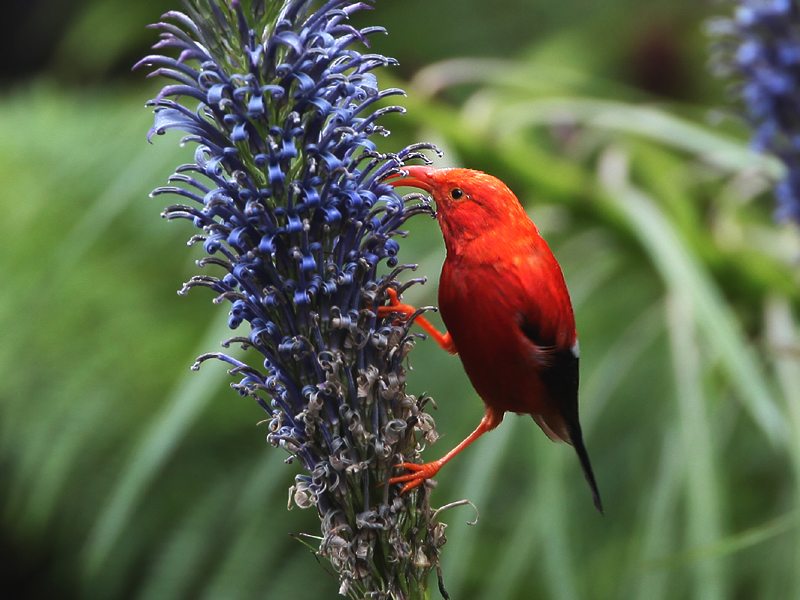
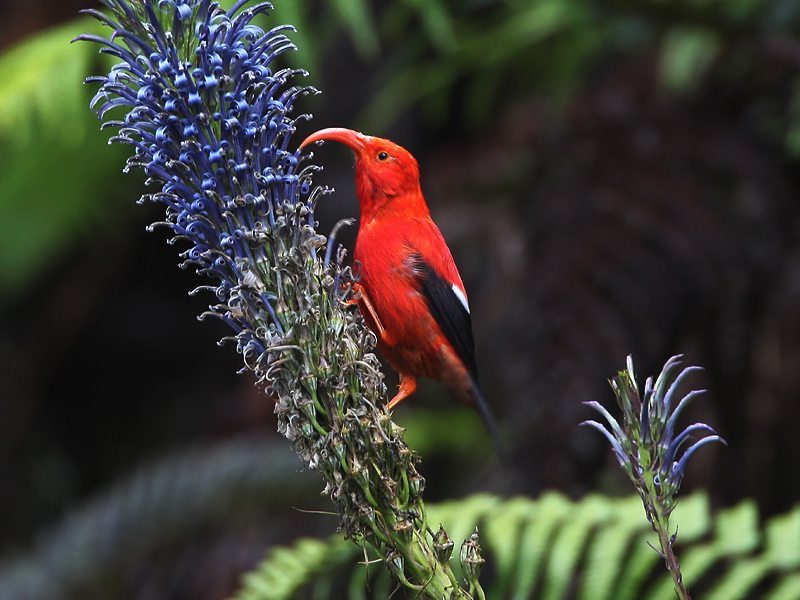
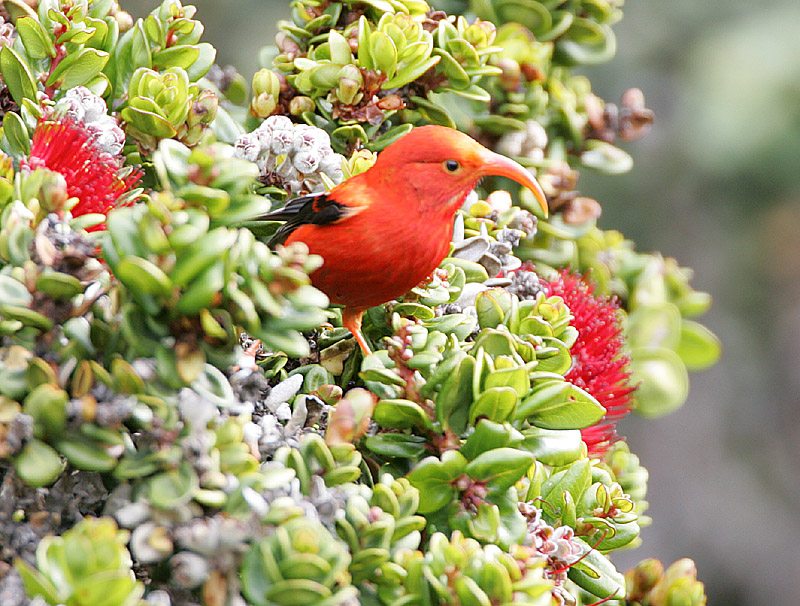
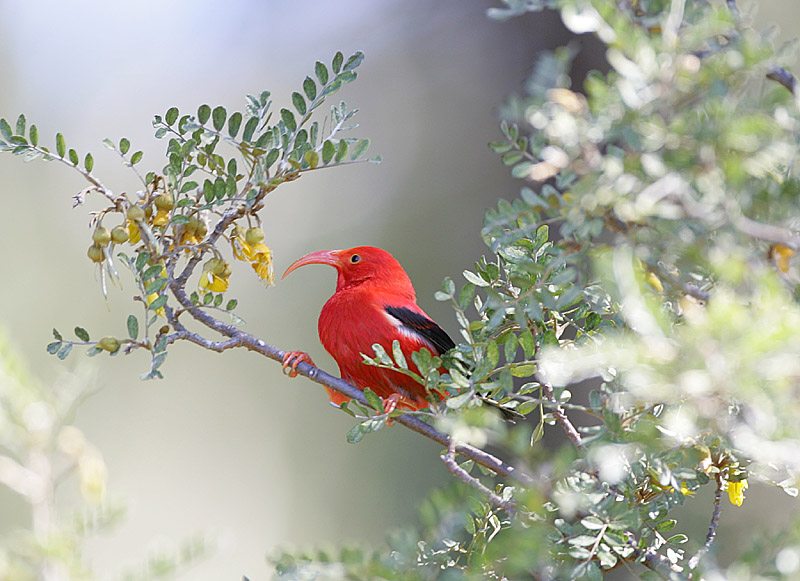
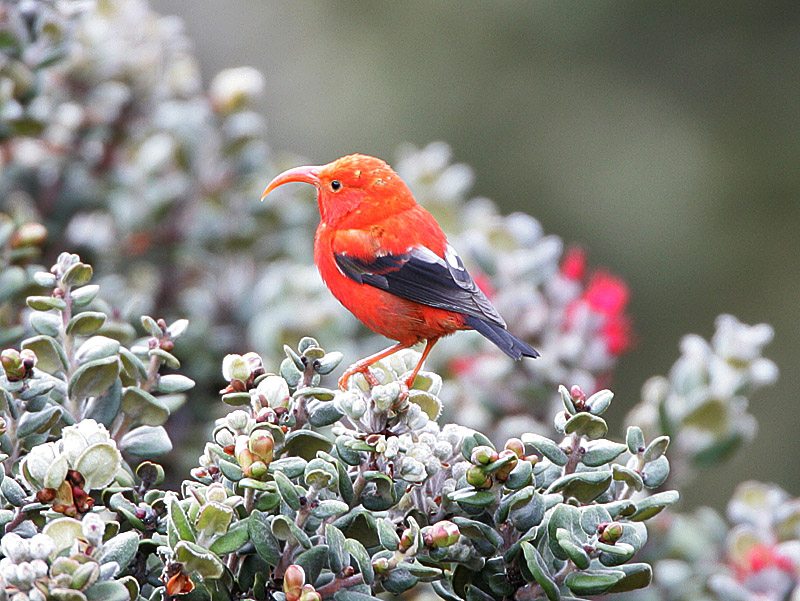
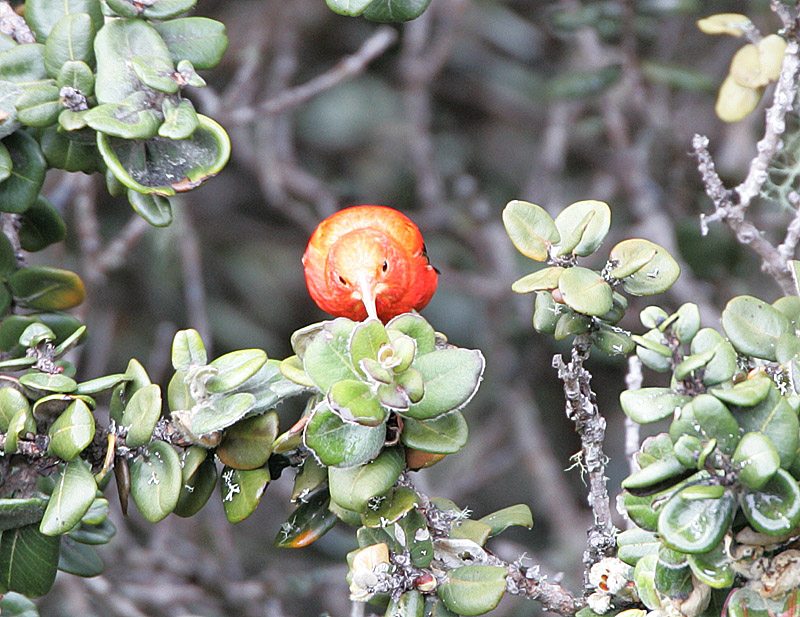
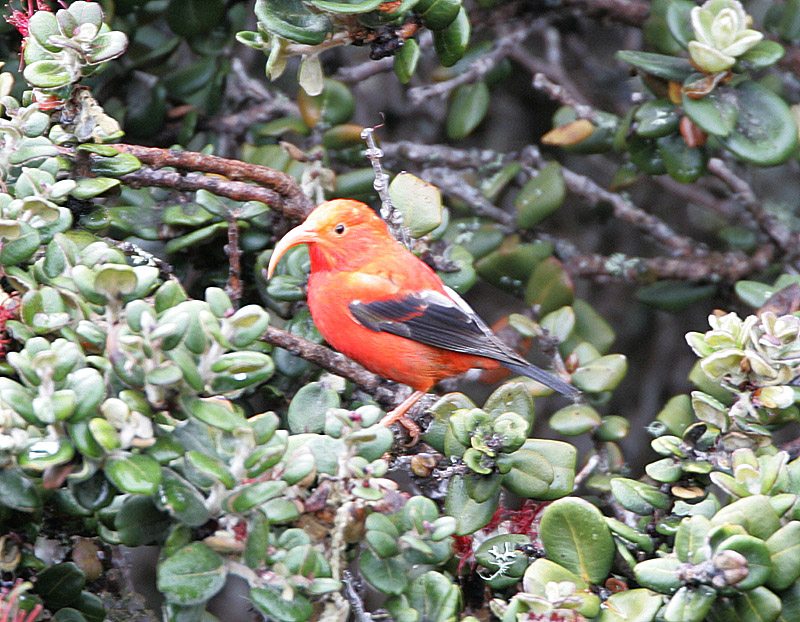
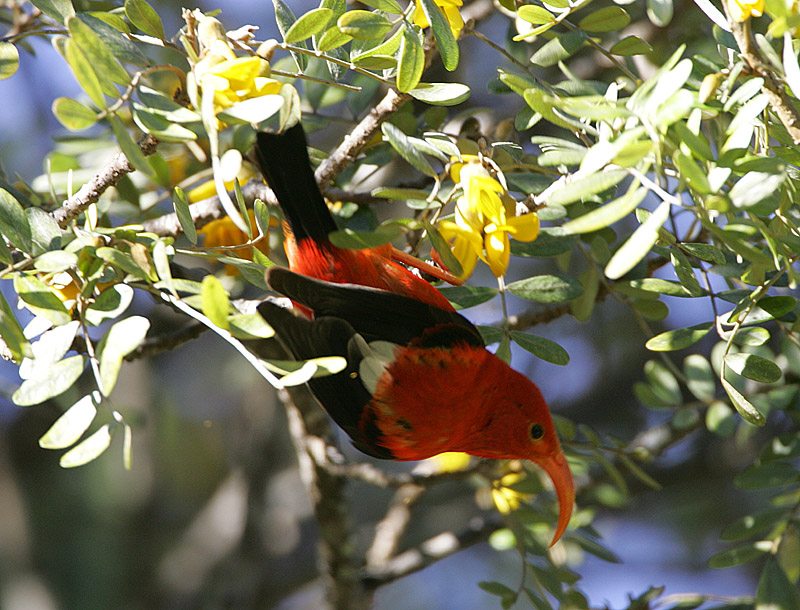
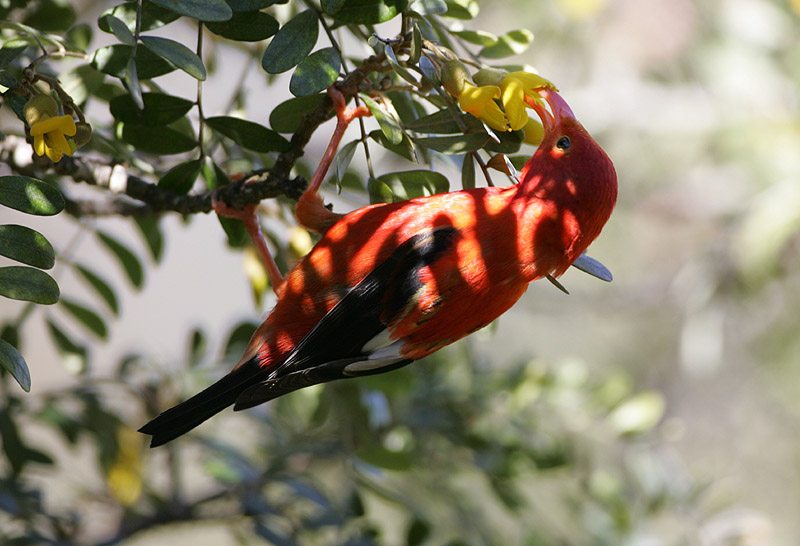
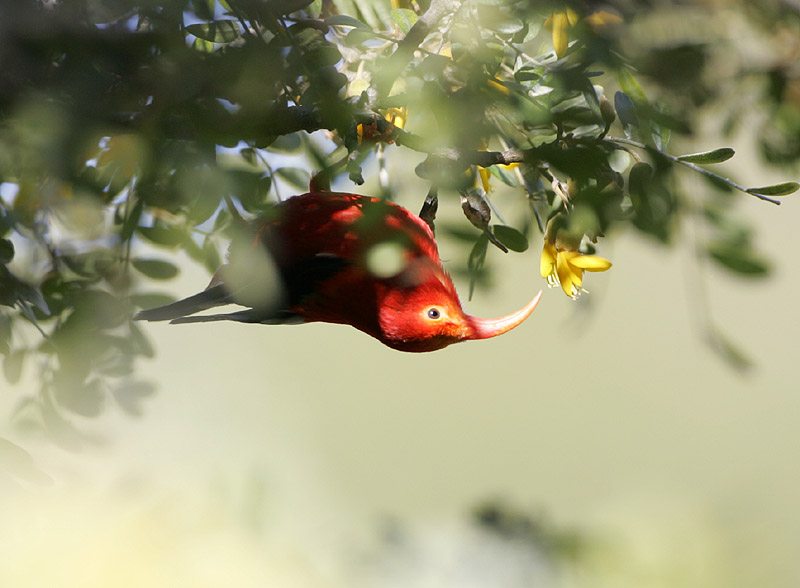
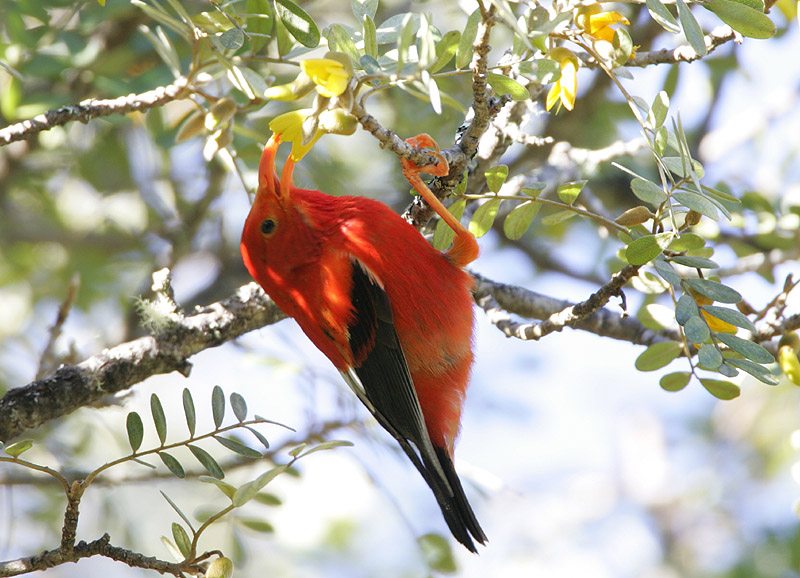
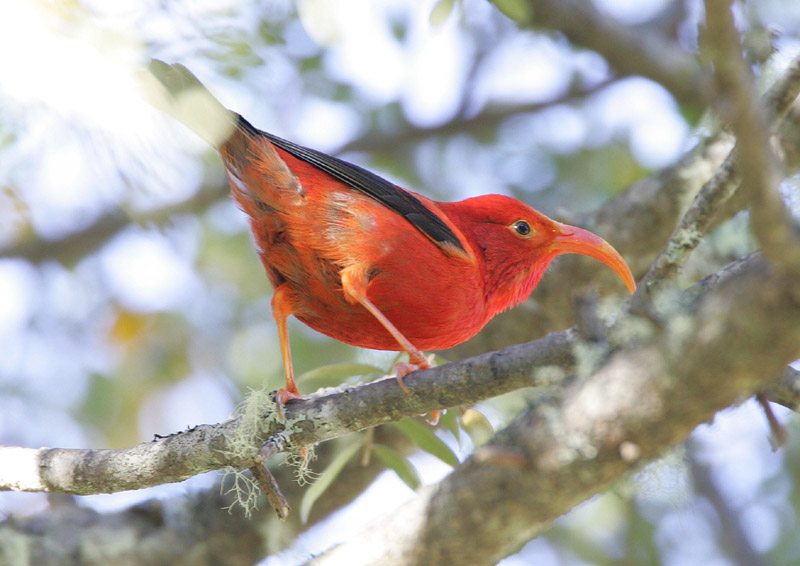
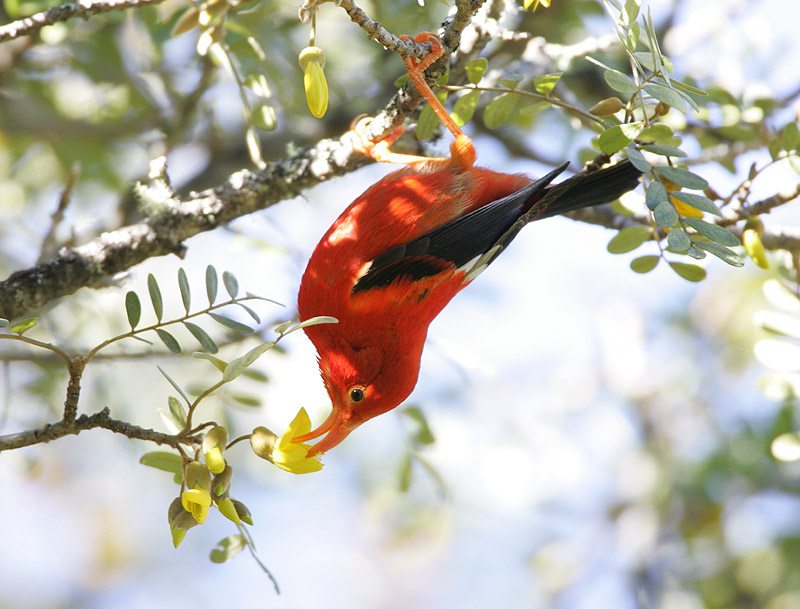
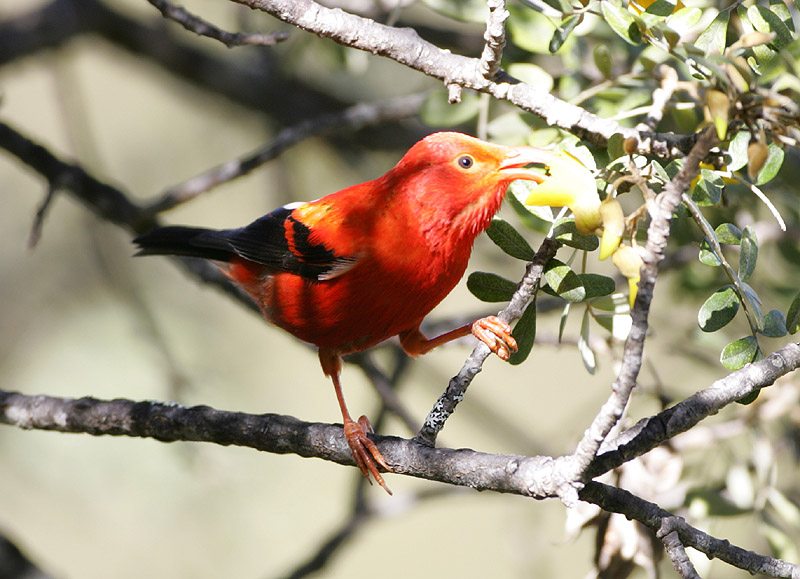
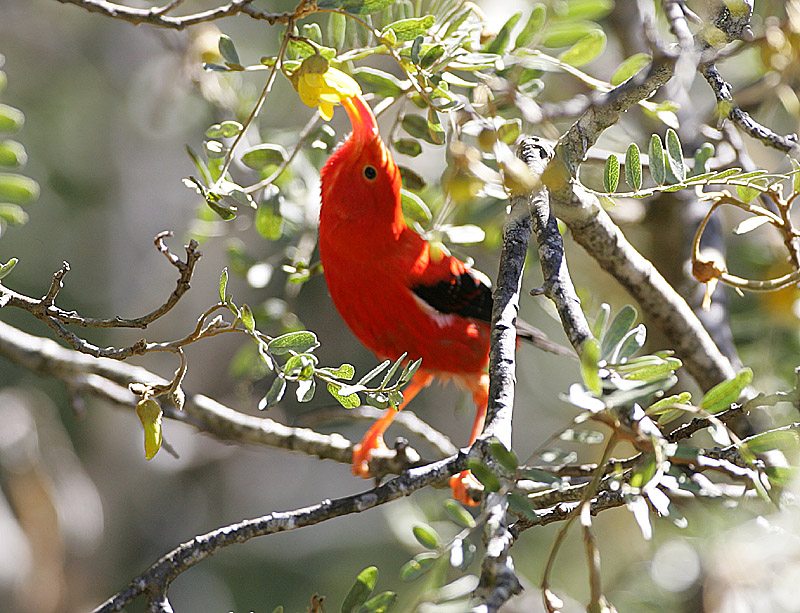
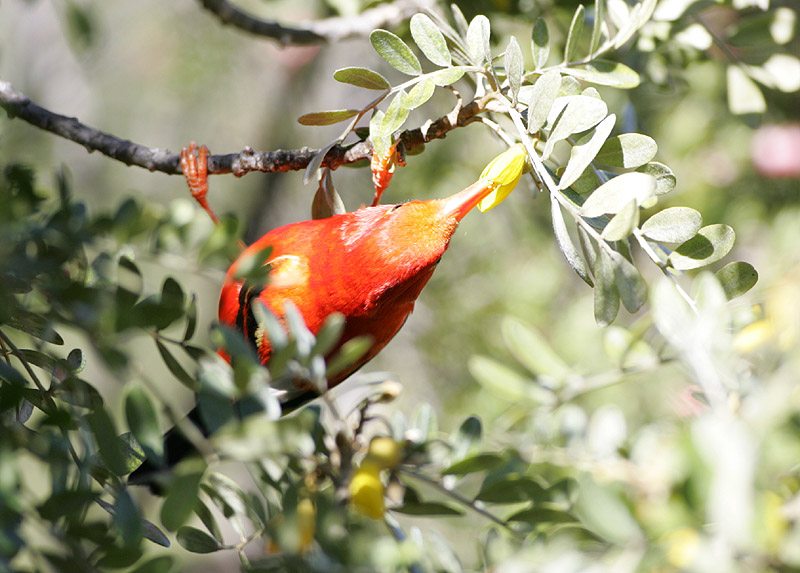
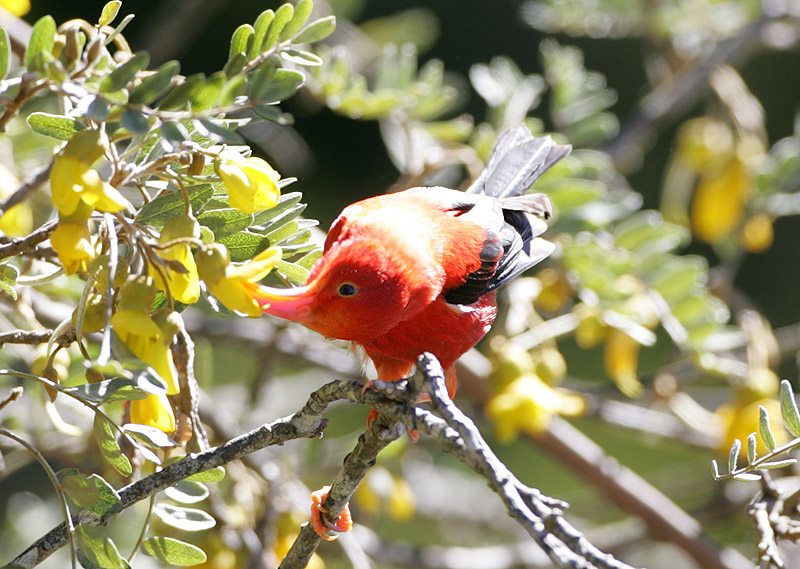
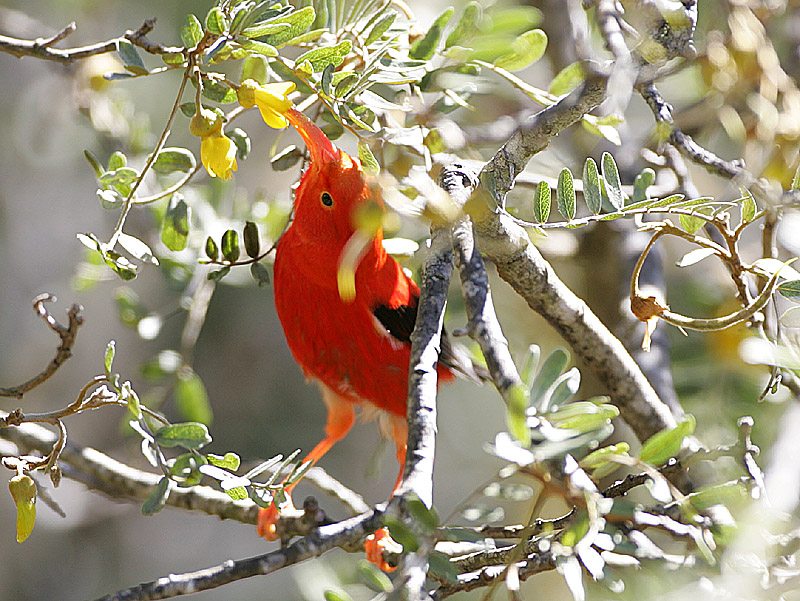
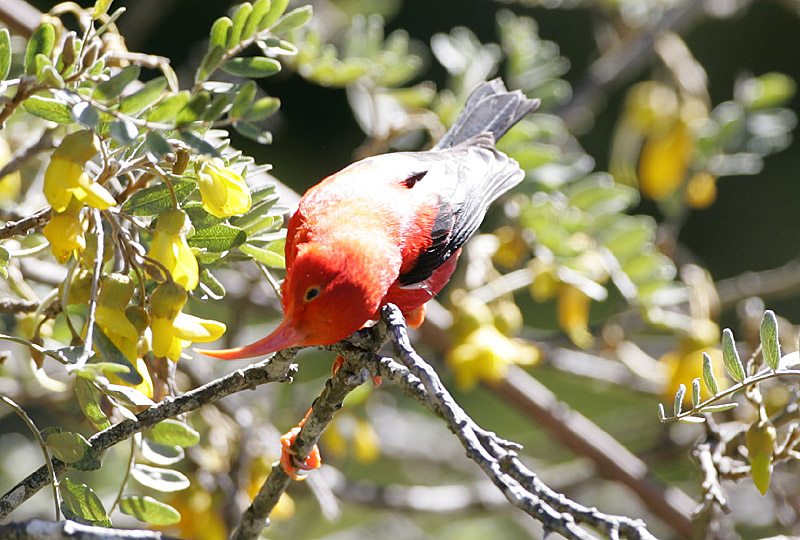
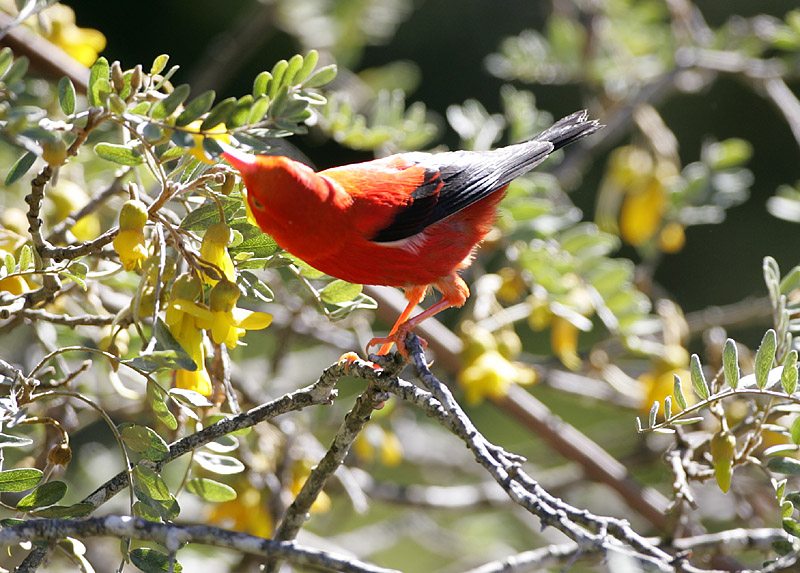
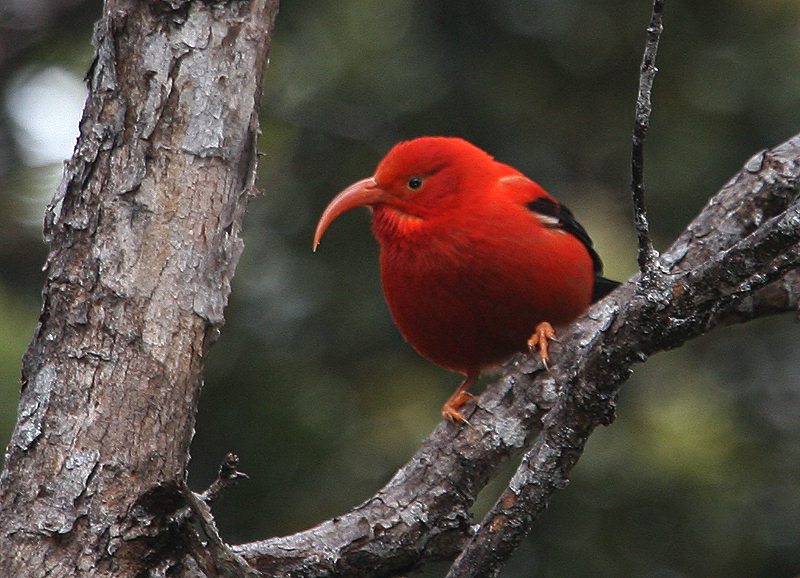
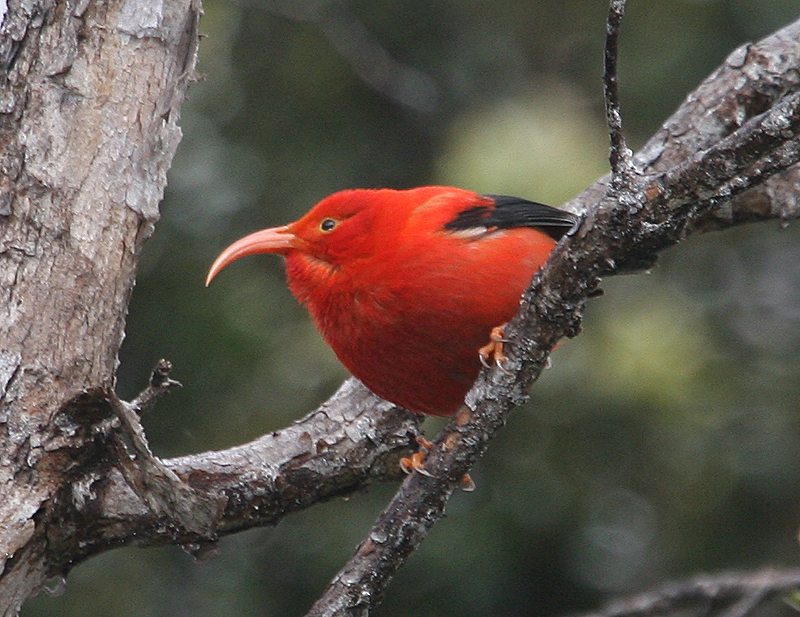
In a forest full of red blossoms, the bill gives the bird away. The Iiwi has a long, peach-colored bill that arcs downward past the chin. This Hawaiian honeycreeper appears in our company logo and in two Maui photo series by Michael Walther.
View the photographs
- Scientific name
- Drepanis coccinea
- Family
- Fringillidae
- Range
- Hawaiian Islands
- U.S. status
- Threatened
Recognizing an Iiwi
Adults are about six inches long. Both sexes have scarlet plumage, dark wings and tail, and the same unmistakable bill. A juvenile looks strikingly different, with mottled yellow, brown and black plumage. Color alone can send you looking for the wrong bird.
Following the flowers
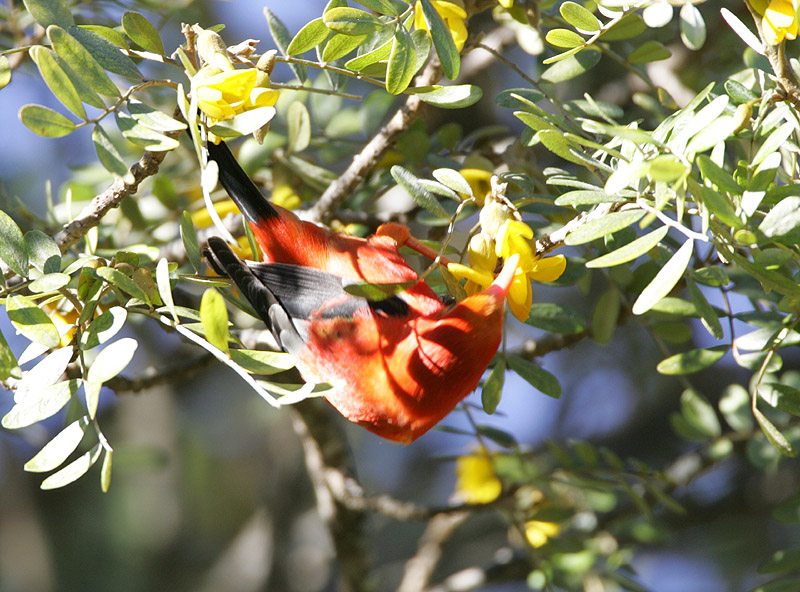
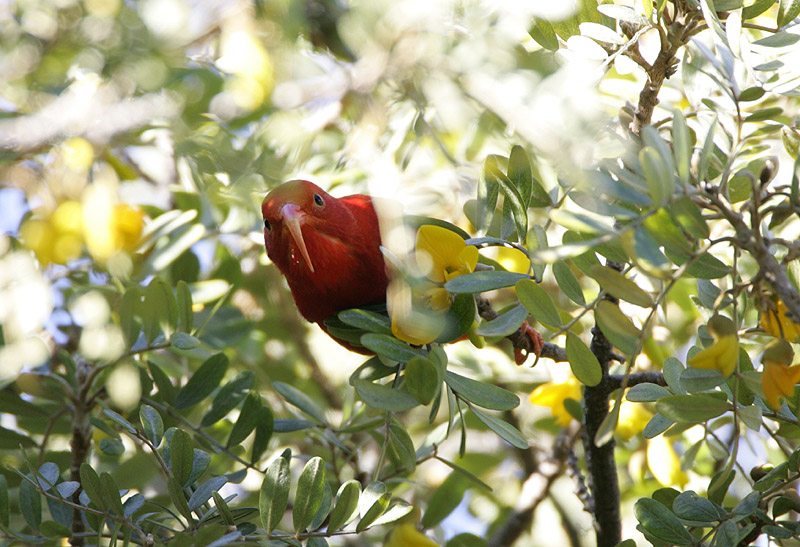
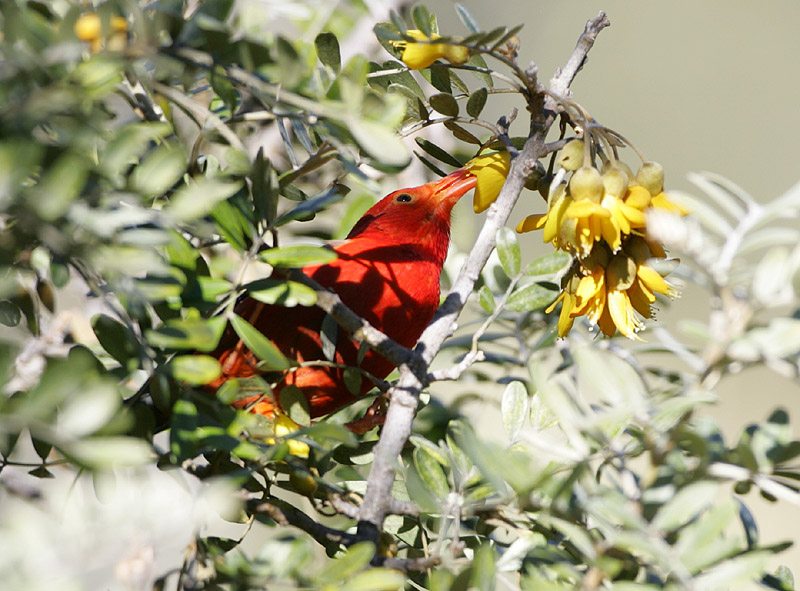
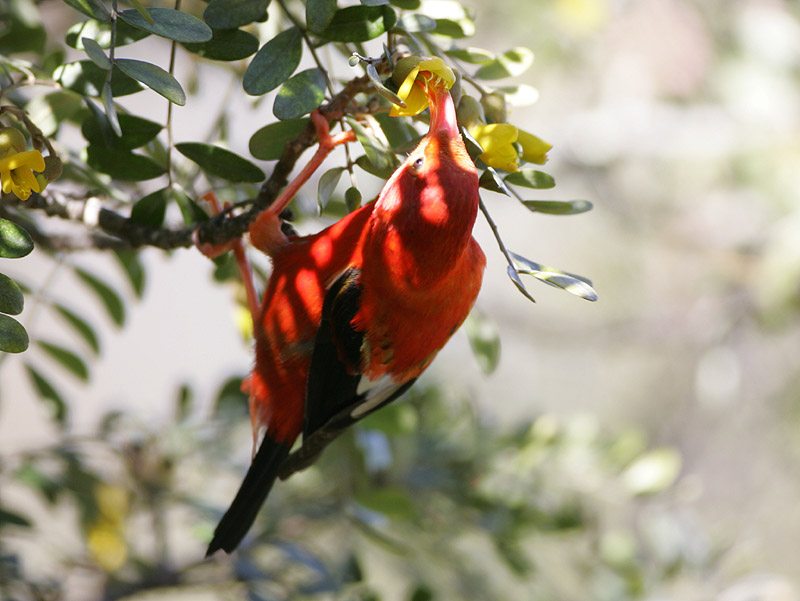
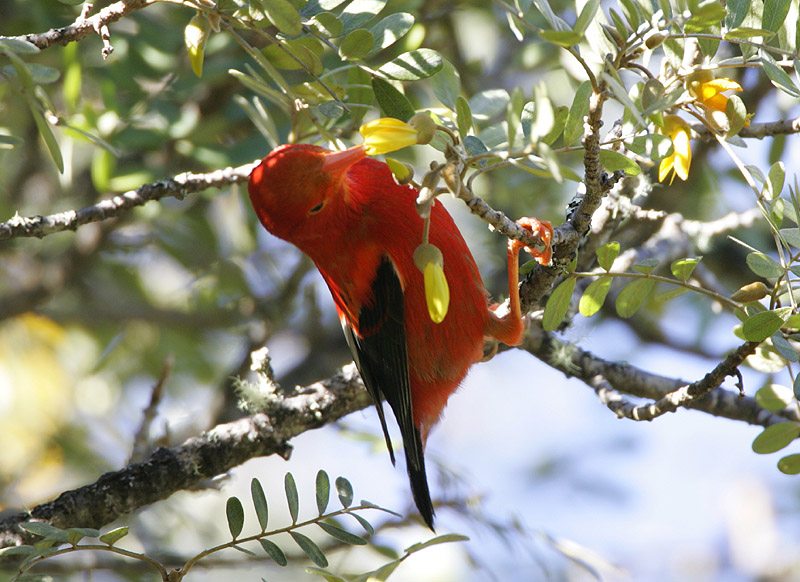
Iiwi travel between trees as flowering peaks shift. Ohia nectar is an important food, and pollen travels with the bird to the next blossom. Small arthropods also form part of its diet. An especially rich source of nectar can be worth defending.
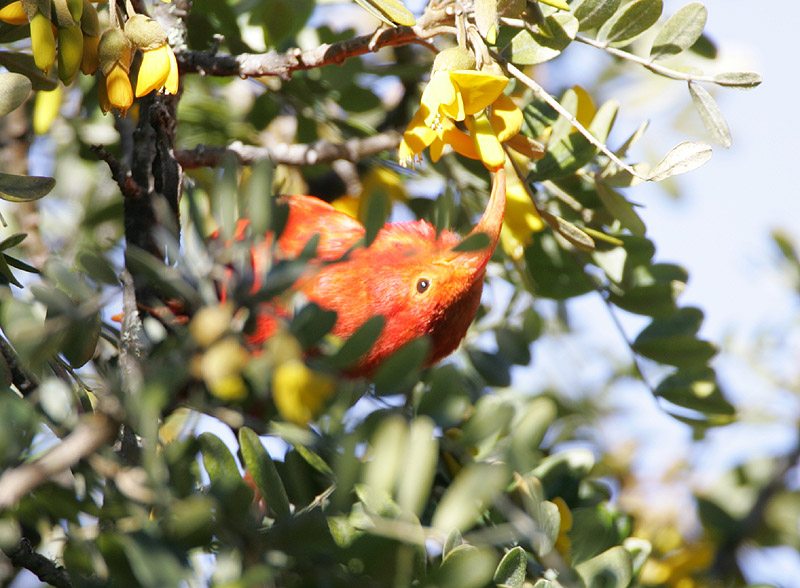
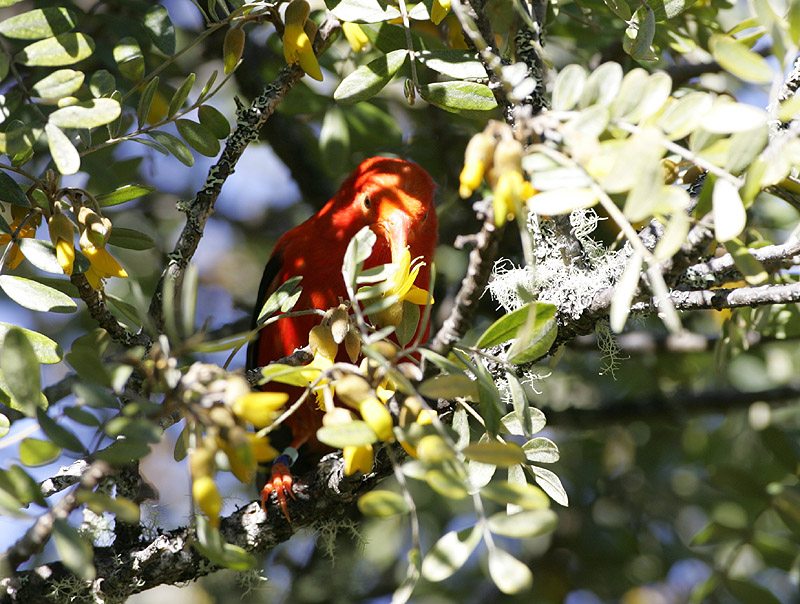
Michael’s September 2010 sequence on Maui shows the bird beside the curved blossoms of Lobelia grayana. In the January 2006 series, originally cataloged under mamane, compare the angle of the head between photographs. Even where a branch hides the body, the curve of the bill is visible.
Listening for the bird
An Iiwi may give a sharp, metallic squeak and then fall quiet. Its song often comes as one or two notes with a pause before the next phrase. Both sexes sing, and both can imitate other birds. Cornell’s recordings let you compare the pauses in song with the shorter calls.
An open cup in the canopy
Both parents help build the cup-shaped nest. The female incubates the eggs, usually two, while the male brings her food away from the nest. A bird in the middle of a courtship chase may look as intent on its companion as a feeding bird is on a flower.
Forest, elevation and disease
The Iiwi is endemic to the Hawaiian Islands. Its remaining populations are concentrated in native upland forest on Hawaii Island, Maui and Kauai. It is federally listed as threatened. Mosquito-borne avian malaria poses a particular danger, alongside forest loss and degradation.
The Oahu Species List preserves a historical Iiwi entry. For an Oahu forest outing, the island’s own Amakihi is a more relevant honeycreeper to discuss with your guide.